About Stainless Steel Tig Wire
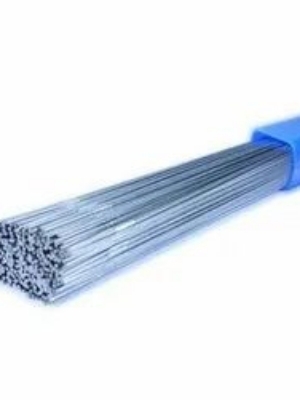
Stainless steel (SS) TIG wire is a high-quality, corrosion-resistant filler metal rod (commonly AWS A5.9) designed for clean, precise, and strong welding, often on thin materials. It is available in various grades (e.g., 308L, 316L, 309L) tailored to match the base metal for applications in food, pharmaceutical, and maritime industries.
High-Performance Welding WireThis TIG welding wire is manufactured from high quality stainless steel, supporting a range of grades for diverse joining applications. Engineered for industrial requirements, it boasts a bright, clean finish and exceptional mechanical properties, making it ideal for critical welding jobs that demand both strength and corrosion resistance.
Versatile Industrial ApplicationDesigned for use across manufacturing, fabrication, repair, and maintenance, our stainless steel TIG wire accommodates a wide range of industries. Its versatility in welding various grades of stainless steel extends its utility to projects requiring durability and resistance to harsh environments, especially where high service temperatures are expected.
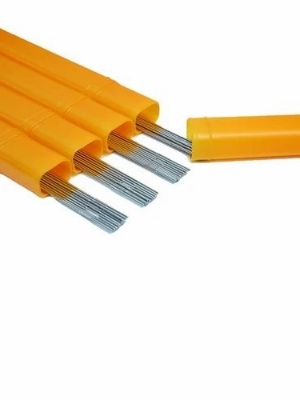
Consistent Quality and Easy HandlingThe product is supplied in standard 1-meter lengths and multiple diameters, with options for custom lengths on request. Its bright, smooth surface ensures stable arc performance and minimal contamination during welding. Secure packaging in plastic tubes or boxes preserves quality during transport and storage.
FAQ's of Stainless Steel Tig Wire:
Q: How is Stainless Steel TIG Wire used in welding applications?
A: Stainless Steel TIG Wire serves as a filler metal during TIG (Tungsten Inert Gas) welding processes. The operator manually feeds the wire into the weld pool to join stainless steel components, ensuring strong, ductile, corrosion-resistant welds.
Q: What grades of stainless steel TIG wire are available and which applications do they suit?
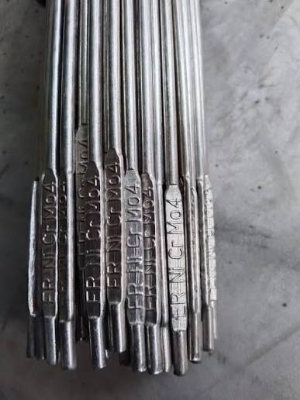
A: The wire is available in ER308, ER308L, ER316, ER316L, ER309, ER312, among others. Each grade is tailored for welding specific types of stainless steel; for example, ER308/308L is commonly used for general-purpose 304 stainless welds, while ER316/316L is suited for applications requiring higher corrosion resistance.
Q: When should I choose a particular wire diameter, such as 1.6 mm or 3.2 mm?
A: The choice of diameter depends on the thickness of the material being welded and the desired weld bead size. Thicker materials and larger welds generally require larger diameter wires, such as 2.4 mm or 3.2 mm, while thinner materials often use 1.6 mm or 2.0 mm wire.
Q: Where should Stainless Steel TIG Wire be stored for maximum shelf life?
A: The wire should be stored in dry conditions, ideally inside its original plastic tube or carton box packaging. This prevents moisture absorption and corrosion, ensuring a long shelf life and consistently high-quality welds.
Q: What are the benefits of using stainless steel TIG wire with a bright, clean finish?
A: A bright, clean surface minimizes risks of contamination, promotes stable arc performance during welding, and results in aesthetically pleasing welds with superior corrosion resistance.
Q: What is the typical packaging for this TIG wire and how does it help?
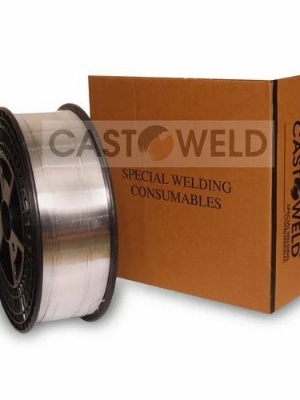
A: Each wire is securely packed in plastic tubes or carton boxes, protecting it from damage, contaminants, and moisture during storage and transit, ultimately preserving the wire's quality until use.






 Send Inquiry


 Send Inquiry